
Walk across almost any modern campus today and you will notice something different from just a few years ago: buildings that sense, adjust, and respond to the people inside them. These smart upgrades are not just about saving money on utility bills or impressing prospective students during a tour. They offer a living, breathing preview of the technology students will encounter in their careers, homes, and communities. Understanding how these systems work can help anyone, whether a parent, a student, or a curious homeowner, make smarter choices about the tools shaping daily life.
Renewable Energy Systems Powering Campus Buildings
Colleges and universities are increasingly turning to renewable energy to cut costs and reduce their environmental footprint, and students see the results firsthand every day. Rooftop and parking structure installations have become common sights, generating electricity that offsets grid demand during peak hours. Many campuses now pair solar panels with battery storage so that energy collected during sunny afternoons can be used to power evening classes or dormitory lighting. This visible infrastructure gives students a practical understanding of renewable energy that textbooks alone cannot provide.
Beyond the environmental benefits, these installations serve as real-world case studies for engineering, business, and environmental science courses. Students can track energy production data through campus dashboards, comparing output on cloudy days versus clear ones. This hands-on exposure often sparks interest in careers related to clean energy, even among students who never planned to study it formally.
- Real-time energy dashboards let students monitor generation and consumption patterns
- Battery storage systems extend the usefulness of daytime energy collection into evening hours
- Campus sustainability offices often use these systems to teach budgeting and cost-benefit analysis
- Some schools offer work-study positions maintaining and monitoring these systems
Modernizing HVAC and Building Infrastructure
Behind the walls of upgraded campus buildings, mechanical systems are getting smarter too, and the construction process itself teaches valuable lessons about how buildings function. When contractors retrofit older dormitories or lecture halls, they often need precise tools to route new wiring, sensors, and ventilation lines through existing concrete and masonry. Air feed drills are commonly used during these renovations because they allow crews to bore clean, controlled holes without overheating equipment or damaging surrounding structural material. Students studying facilities management or construction technology sometimes get rare behind-the-scenes tours of these projects, learning how invisible infrastructure supports the comfort they take for granted.
These infrastructure upgrades also improve air quality and temperature regulation across campus, which directly affects student concentration and wellbeing. Modern HVAC systems now use sensors to detect occupancy and adjust airflow accordingly, reducing energy waste in empty classrooms. This kind of responsive infrastructure is becoming standard not just in education but in office buildings and homes as well.
- Occupancy sensors help HVAC systems avoid conditioning empty rooms
- Precision drilling tools reduce structural damage during renovation projects
- Air quality monitors alert facilities staff to ventilation issues in real time
- Retrofitted buildings often see measurable drops in energy consumption within the first year
Automated Lighting and Shading Solutions in Classrooms
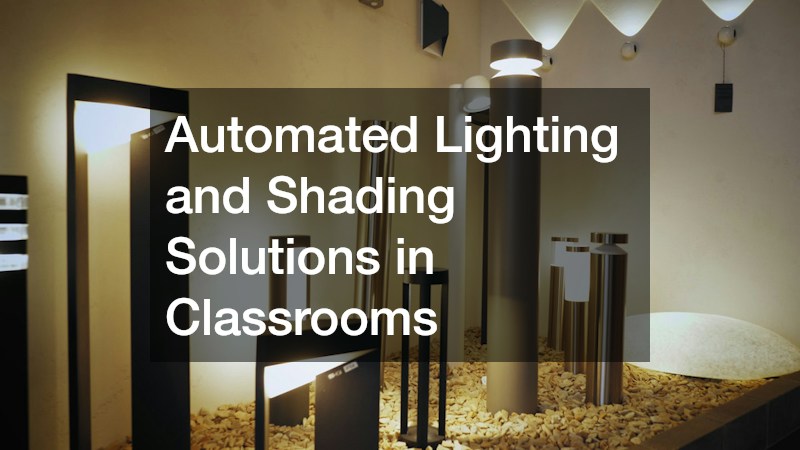
Natural light plays a major role in student focus and mood, and campuses are increasingly using automated systems to manage it throughout the day. Lutron motorized shades have become a popular choice in newly renovated classrooms and libraries because they adjust automatically based on sunlight intensity and time of day. Rather than relying on a staff member to manually raise or lower blinds, sensors detect glare on screens or excessive heat buildup and respond within seconds. This kind of automation demonstrates to students how comfort and efficiency can be built directly into a space rather than added as an afterthought.
These shading systems also integrate with campus-wide scheduling software, so a room can automatically prepare itself before a lecture begins. Lighting dims for projector use, shades lower to reduce glare, and the system returns to a neutral setting once class ends. Watching this kind of seamless coordination gives students a tangible sense of how smart home and smart office technology might function in their own future spaces.
- Automated shades reduce glare on digital screens and projectors
- Systems can sync with class schedules for hands-free room preparation
- Reduced manual adjustment saves facilities staff time across large buildings
- Energy savings occur when shades limit unnecessary heating or cooling from sunlight
Smart Security and Access Control Across Campus
Security upgrades are another area where students directly experience emerging technology, often without realizing how sophisticated the systems have become. Keycard access has evolved into mobile credential systems, where a student’s phone or smartwatch grants entry to dorms, labs, and libraries. These systems log entry times and can alert campus security to unusual access patterns, adding a layer of safety that traditional locks never offered.
Facial recognition and license plate readers are also appearing in select parking structures and high-security buildings, sparking important conversations about privacy and data use. Students studying computer science or public policy often analyze these systems as case studies in balancing convenience with civil liberties. This exposure helps young adults think critically about the technology they will encounter in workplaces and public spaces after graduation.
- Mobile credentials reduce the need for physical keycards
- Access logs help security teams respond quickly to unusual activity
- Facial recognition raises ongoing debates about privacy and consent
- Data collected by these systems is increasingly used in campus safety research
Data-Driven Facilities Management and Predictive Maintenance
Perhaps the least visible but most transformative upgrade happening on campuses is the shift toward predictive maintenance powered by data. Sensors embedded throughout buildings track everything from water pressure to elevator vibration patterns, flagging potential failures before they cause disruptions. This proactive approach saves institutions significant repair costs and prevents the kind of unexpected outages that used to shut down entire buildings for days.
For students, this system offers a quiet lesson in how data analytics applies to physical infrastructure, not just apps and websites. Facilities teams now rely on dashboards that predict when a boiler needs servicing or when a roof is likely to develop leaks based on weather patterns. Understanding this shift helps students see how careers in data science increasingly intersect with traditional trades and building management.
- Sensor networks track wear and tear on major building systems
- Predictive alerts reduce emergency repair costs
- Facilities teams use historical data to plan maintenance schedules years in advance
- This model is increasingly adopted in hospitals, airports, and corporate campuses
Smart campus upgrades are more than convenient amenities; they are functioning classrooms in their own right, teaching students how tomorrow’s buildings will think, respond, and adapt. Whether it is renewable energy generation, automated climate control, or predictive maintenance driven by data, these systems offer a preview of technology that will soon be standard in homes and workplaces everywhere. Readers considering their own property upgrades, or students choosing a field of study, can use these campus examples as a practical starting point for research. The next step is simple: visit a recently upgraded building, ask questions about the systems in place, and notice how thoughtfully designed technology can quietly improve everyday life.